


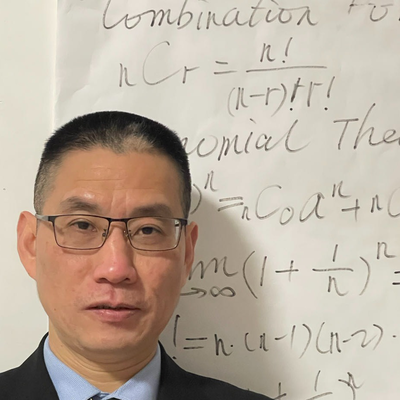
关于 Hu Jian:
I am an experienced teacher as K-12 Chinese, Math, and English Teacher and highly educated. I have over 30 years of teaching experience, including 14 years from elementary to high schools and 19 years in college. I also hold a master's degree in education principle and administration from Jiangxi Normal University in China and a Ph.D. in Higher Education Leadership in Clemson University in the US. I am passionate about providing high-quality education and dedicated to creating a positive and inclusive learning environment for all students.
经验
Students rather than the teacher are masters of the classroom and teacher should be the facilitator and support of students’ learning; School education should play an active and crucial role in facilitating an individual's socialization; A teacher needs to be flexible and make adjustment according to changing demands of different subjects. For instance, teaching native students Chinese differs considerably from teaching foreign students Chinese, definitely a teacher needs to adopt different teaching strategies when teaching non-Chinese-speaking students from teaching Chines-spoken students; Positive education should elevate the level of civilization of individuals and society as a whole; In this regard, having one more educated person in the classroom may lead to one less criminal on the street; Parents should be integrated into the education process in a timely manner to effectively advance students' intellectual and spiritual growth; School education should work hand in hand with social education to promote democracy; School education should serve as a powerful tool to enlighten students; Creativity is fostered through respect for individual differences and sufficient interaction between students and between students and teachers; Students’ effective learning is determined by the combination of students’ centeredness and disciplinary centeredness.
教育
As to me, I am a native Chinese. Thus, teaching Chinese is natural. Meanwhile, as a person who has an international educational and work background, teaching Chinese is something different from my native counterparts. In China, if you ask a teacher of Chinese a question: Why do you teach Chinese? He/She is very likely to look at you very bewilderingly. For a native Chinese, to teach Chinese to later generations is like what their age-old ancestors did in the past: to pass on civilization from generation to generation. People won’t question or challenge some fundamental conceptions of their individual civilization. For instance, these words have been deeply imprinted on people’s mind in China: “There are three forms of unfilial conduct, of which the worst is to have no descendants.” For an individual coming from individual-centered culture, these words sound ridiculous. “Why my personal business has something to do with others?” However, since the opium war, China has embarked on a track of modernization. To some extent, this process of modernization is also called westernization in that China was forced to learn from a heterogeneous civilization. Even to now, Chinese civilization seems mysterious to many Westerners. In my view, Chinese culture and Western Christianity-centered civilizations are two typical heterogeneous cultures, they are in two poles. In this regard, teaching Westerners Chinese does not indicate we need make people from different backgrounds homogeneous but set up a bridge for them to communicate with and learn from each other. This is also the purpose of teaching non-Chinese-speaking students.
来自与Hu Jian相同的教育 / 培训部门的专业人员


来自不同部门的专业人员靠近Nanchangshi, 江西